We publish blog articles on management, hobbies, current events, and podcasts daily. If you register for news updates, we will send you update information, so feel free to sign up. (We do not distribute advertisements)
About
Hoshikawa Tetsushi (Hossy)'s personal siteHossy.orgis a site that outputs information from various experiences such as entrepreneurship, management, and graduation through blog articles, podcasts, and various activities.
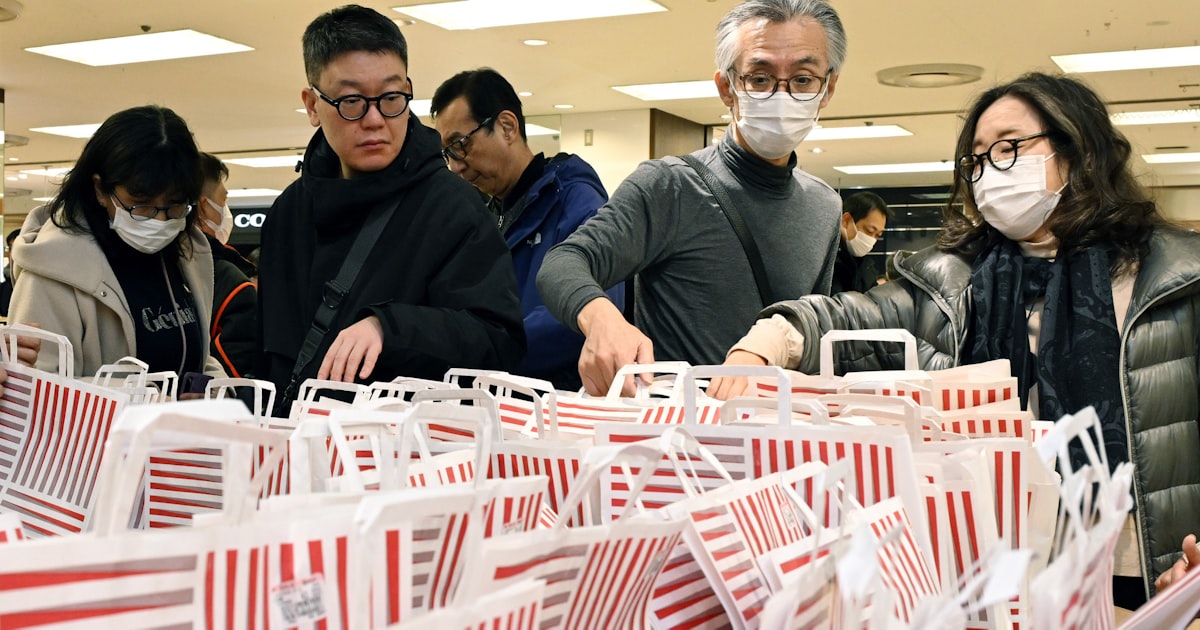
Lucky bags focus on practicality amid rising prices; first sales start on the 2nd at Sogo & Seibu and others, with polarization toward higher price tiers – NikkeiOn the 2nd, the 2026 New Year’s first sales kicked off at Sogo & Seibu, Isetan Mitsukoshi and other department stores. With higher prices, food lucky bags proved especially popular, drawing throngs of shoppers from early morning. Meanwhile, at Kintetsu Department Store a painting priced at 10 million yen was sold, making the polarization of spending even clearer during the first-sale battle. At the Sogo Yokohama store (Yokohama City), the doors opened at 8:50 a.m., ahead of schedule, and about 10,000 people entered within 30 minutes. A woman in her 50s from Yokohama, who came with her husband, said, “We buy lucky bags every year”
Driven by higher prices, food lucky bags have been drawing crowds to stores since the morning. On the other hand, the sale of a 10-million-yen painting at Kintetsu Department Store highlights how the polarization of consumer spending is becoming even more pronounced during the New Year’s first-sale campaign.
The above story appeared in the January 3, 2026 morning edition of the Nikkei newspaper. It seems that more than 2,000 people were lined up in front of department stores before they opened, making the New Year’s first sale something of a seasonal tradition.
That said, I myself have no memory of ever buying a lucky bag, and I doubt I ever will. Why are people so captivated by them?
Topic
When did lucky bags become a New Year’s tradition?
Come New Year’s, lucky bags inevitably come up in conversation, right alongside first shrine visits and osechi cuisine, which shows they have gained full citizenship in Japan’s New Year culture.
If you stop and think logically, it’s hard to pinpoint their appeal. People line up to buy a bag whose contents they don’t even know, acting as though it has inherent value—and it’s even described as “full of dreams.”
There are various theories about the origin of lucky bags, but one traces them back to kimono shops in the Edo period. They would stuff unsold bolts of fabric and other items into a bag and sell it as a good-luck charm. In other words, from the outset their essence was clearance sale. Somehow that practice morphed into “dreams” and “trying your luck,” survived into modern times, and has now become a New Year’s fixture. It’s the perfect match between commercial savvy—i.e., marketing—and the Japanese love of seasonal events.
Seduced by the magic words “based on the list price”
You can’t discuss lucky bags without talking about the sense of bargain. Phrases like “worth ○○ yen at list price” instantly make the bag look dazzling. People feel they’ve scored an incredible deal—good fortune and good value all in one.
However, that shine is heavily polished and exaggerated. The list price is the price set at launch and doesn’t necessarily match the item’s current value. Goods that didn’t sell even at sale prices are magically reassessed at full list price once they’re put into a lucky bag. So while the numbers may look like a bargain on a list-price basis, in reality the value is usually about the same as the most recent sale price.
Given that, as mentioned above, lucky bags started as a way to bundle items that hadn’t sold through normal channels, popular products generally aren’t included. Instead, they’re a mix of things that wouldn’t move at full price, so evaluating them on a list-price basis simply isn’t rational.
The allure of “hidden treasures” moves people.
Even so, lucky bags persist because there are indeed dream-worthy stories. In the past, some bags contained items whose market value clearly exceeded the price paid, and those tales are still told today. But the key point is probability. The headline-grabbing bags are highly visible, yet they’re exceedingly rare. For most people, the experience ends with the unremarkable verdict: “Well, if you go by list price, I guess it was a bargain.”
Yet people are drawn to the chance that there just might be a hidden gem. It’s much like seeing a banner for a big lottery win and somehow feeling you could be next. Emotion overrides reason; in a sense, it’s a form of gambling.
A system that easily produces unwanted items
One reason I never buy lucky bags—except when the true value is clear—is that they tend to generate waste. Clothes that don’t fit, colors or designs you don’t like, knick-knacks you have no use for: the moment you open the bag, there’s a good chance you’ll be stuck with items you don’t know what to do with, because you didn’t choose them; the store bundled them for its own convenience.
As a result, you pass things on, sell them at a flea market, and whatever’s left you toss. This cycle is a structural problem inherent to lucky bags. Companies reduce inventory and consumers get a momentary high, but from a societal perspective it just means goods take a detour on their way to the trash. It’s not a system that delivers needed items to the people who need them.
Why lucky bags still thrive every year
After all this, lucky bags may seem like a losing proposition, yet people still line up for them every year because sellers market them as a special once-a-year event.
At the turn of the year, when the whole society is awash in a celebratory mood, lucky bags offer an easy dose of the extraordinary. People buy them not because they “need” anything, but because “it’s New Year’s,” “it’s festive”—a motivation rooted in timing and in the very name “lucky bag.”
On top of that, people find uncertainty irresistibly attractive; not knowing the outcome makes them want to take part. Lucky bags tap neatly into this trait. And the fact that a few, very rare bags actually are “worth more than the price” keeps people thinking, “Maybe, just maybe, I’ll get one too.”
If there is such a thing as a good lucky bag, what would it look like?
That said, I don’t want to dismiss all lucky bags outright.
There are lucky bags whose contents are disclosed in advance and clearly offer a price advantage. Still, one has to wonder whether they really qualify as “lucky” bags. In most cases a lucky bag contains multiple items, and not all of them are necessarily things you want, so even when you know what’s inside, you’ll still end up with things you don’t need. That said, if the bag is filled with merchandise from your absolute favorite brand or artist, you might genuinely want every single item. In that sense, a lucky bag from a strong brand could be one whose entire contents make you happy.
There are also experience-based or subscription-type versions designed so they don’t generate unwanted physical stuff. From the standpoint of discovering something new, these “lucky bags” might be interesting. Because there’s almost no element of chance, however, they may no longer count as true lucky bags.
Are lucky bags filled with dreams, or with mere expectations?
So in the end, what exactly is packed into a lucky bag? Are genuine dreams inside, or is it simply the illusion we call expectation? Everyone will have a different answer, but when I calmly consider their origins and why companies want to sell them, I don’t believe they’re worth buying.
What keeps the lucky-bag tradition alive is our wish to dream. At the special moment of the New Year, we want a brief taste of the extraordinary. That feeling may be the true essence of the lucky bag. Viewed this way, a lucky bag isn’t selling dreams; it’s selling the experience of dreaming.
★
With stories about lucky bags hitting the news every New Year, I finally wrote down and organized the vague thoughts I’d been having.
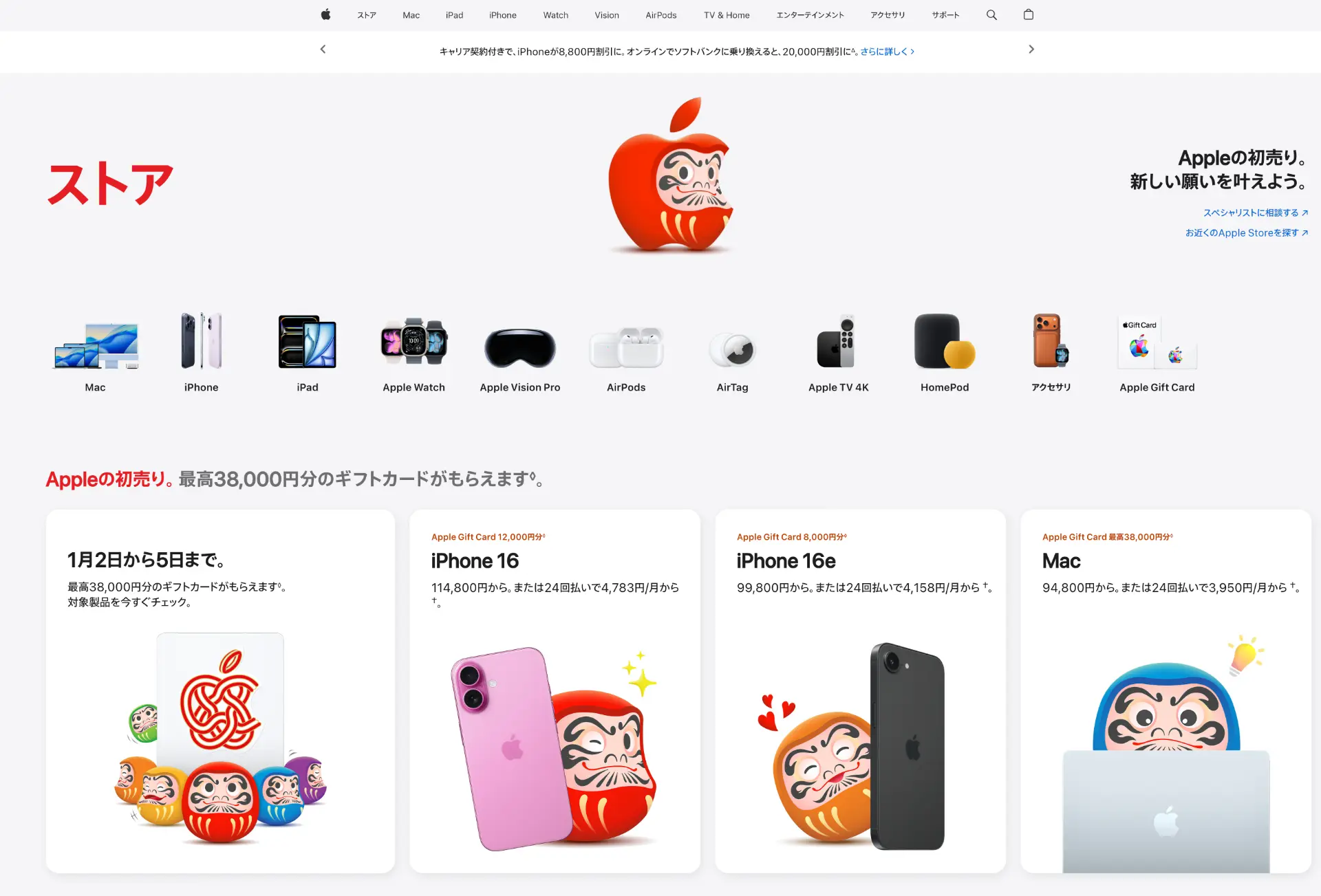
For reference, Apple’s past Lucky Bag once included, for example, a MacBook Air worth ¥98,800 even though the bag cost only ¥36,000. By any measure—including resale value—that was an incredible deal. Apple’s lucky bags also apparently never contained leftover products, making them a rare example you could truly buy as a bargain.
Because I’ve written critically about lucky bags, regular buyers might find this irritating, but as I concluded, buying them as a way to “purchase the experience of dreaming” isn’t wrong.
If you see a lucky bag whose contents are particularly interesting—one you think is actually worth buying—please let me know in the comments or on social media.
Hossy.orgis a site where Tetsushi Hoshikawa (Hossy) shares information from his various experiences such as entrepreneurship, management, and graduation through blog articles, podcasts, and other activities.
Tetsushi Hoshikawa
Founded Trinity Corporation, which deals with digital life products, and "graduated" after about 20 years of management.
Serves concurrently as the CEO of Eureka Studio Corporation, a company planning and developing casual games for smartphones, and as the CEO of the investment company Cosmo Studio.
I regularly publish blog articles and podcasts on topics such as management, hobbies, and current events. If you subscribe to our news updates, we will send you notifications about new content, so feel free to register.(We do not distribute advertisements or similar content)
 Language


 Nikkei








Comments