We publish blog articles on management, hobbies, current events, and podcasts daily. If you register for news updates, we will send you update information, so feel free to sign up. (We do not distribute advertisements)
About
Hoshikawa Tetsushi (Hossy)'s personal siteHossy.orgis a site that outputs information from various experiences such as entrepreneurship, management, and graduation through blog articles, podcasts, and various activities.
The 2025 House of Councillors election is shaping up to be historically turbulent, with bold assertions overshadowing facts
Topic
Higher Turnout and the Ruling Coalition Falls Below a Majority
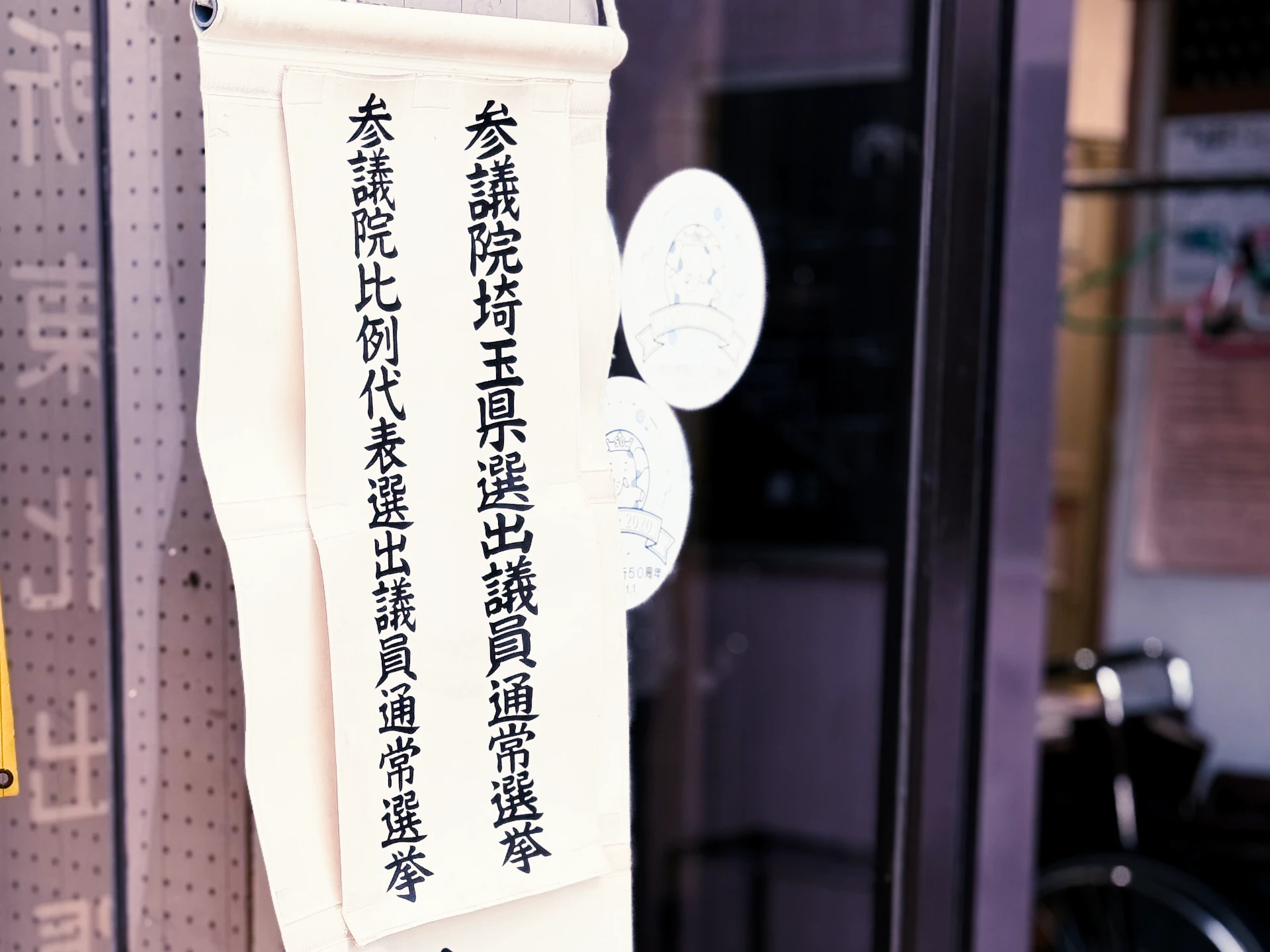
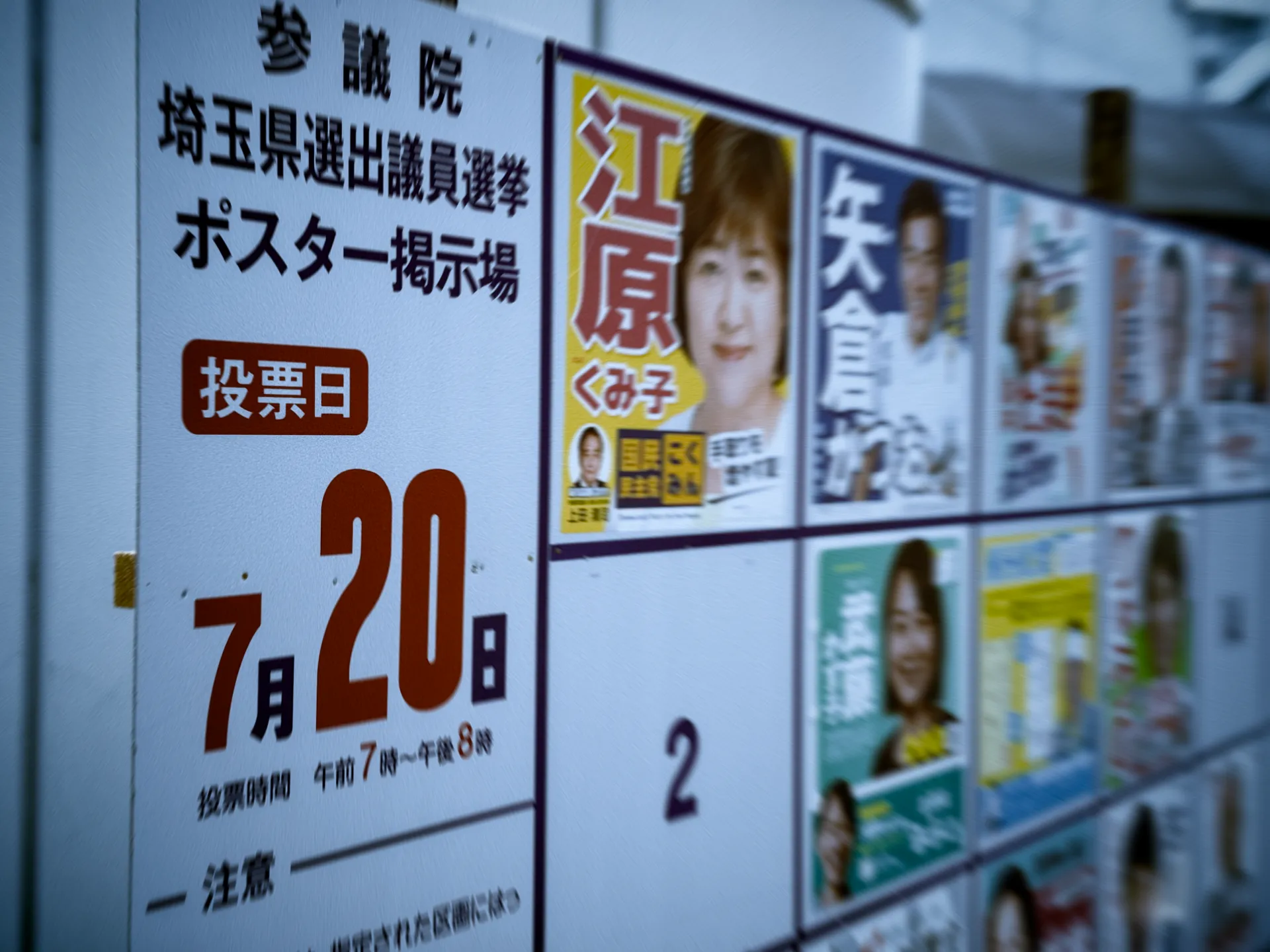
In the 27th House of Councillors election held on July 20, 2025, the Liberal Democratic Party won only 39 seats and its partner Komeito just 8. Having lost seats from before the election, the LDP could not secure a majority even when its uncontested seats were included, and the ruling bloc has now become a “minority government” in the Upper House as well as the Lower House.
Nationwide turnout was 58.51% (up 6.46 points from last time). In Niiza City, Saitama, where I live, it also jumped to 57.68% (up 5.74 points).
The July 20 Nikkei “Shunju” column pointed out an election trivia item: turnout can be predicted from the share of people who answer “definitely will vote” in NHK’s poll conducted right before the campaign starts. In this election that figure was 57.3%, amazingly close to the actual turnout.
The Nikkei
Shunju (July 20) – NikkeiOne piece of election trivia is the prediction of voter turnout. In NHK’s poll carried out just before the official notice, the share of people who say they will “definitely…
As the rule of thumb “higher turnout favors the opposition” suggests, many votes flowed to the opposition parties. The largest, the Constitutional Democratic Party, still managed only 22 seats, but the Democratic Party for the People quadrupled its total to 17, and Sanseito surged to 14. Voters critical of the LDP yet unconvinced by the existing opposition seem to have split their support between these two parties.
The Power of Stating Things Flatly Over Telling the Truth
In this election the recent online trend that “blunt assertions beat facts” was striking. Issues morphed one after another, and accountability for statements seemed to evaporate as a matter of course.
It is no accident that the tactics shown by President Trump in the United States—“lies become truth,” “never admit it even when fact-checked,” and “all dissent is fake”—are being imitated in Japan. Behind this surge, some actors appeared to have studied Trump’s methods and market reactions and applied them skillfully.
Even so, being able to utter words that pierce hearts and move people to act is a kind of leadership. Parties that lost should not confine themselves to fact-checking but see what they can learn. In business, too, strong words—exaggerated or not—often pull an organization forward.
A New Line of Defense: AI Fact-Checking
Winning an election by forcefully peddling untruths is hardly desirable, but it means we must do more than just listen—we must look things up ourselves.
Fortunately, with the spread of generative AI, you can now send a dubious chart or clipped video—just the URL or the post itself—and get an instant fact-check. If you use ChatGPT or Gemini, try the “Deep Research” feature. On X (formerly Twitter), simply mention @Grok and say “fact check,” and you’ll get an immediate reply.
Fiscal Debate and the Perils of MMT-Like Thinking
Some parties calling for tax cuts and handouts have pushed an MMT-style line that “we can cover everything with government bonds” and “bonds aren’t debt, so no problem.” But if long-term rates rise in Japan, where debt already tops 260% of GDP—the world’s highest—interest payments will snowball.
Issuing bonds does not, “for now,” cause rates to spike or trigger fiscal collapse. Yet the BOJ will eventually lift rates and investors will demand higher yields, making increases inevitable. We already spend about ¥10 trillion a year on interest, and that will only swell. Insisting JGBs are not debt because they circulate domestically does nothing for sustainability if interest costs keep climbing.
Massive COVID-era supplementary budgets in FY2020–22 left spending bloated. The initial general-account budget has jumped from ¥101.5 trillion in FY2019 to ¥115.2 trillion in FY2025—an extra ¥13.7 trillion that has never been rolled back.
If we merely returned spending to its pre-COVID level, we’d free up about ¥13.7 trillion a year. A one-off ¥100,000 payment to each of 20 million low-income households—the LDP’s proposal—would cost ¥2 trillion. We could repeat measures of that size several times and still not need new bonds.
Shouldn’t we commit to cutting spending before piling on more debt?
The ruling bloc’s slide into minority status has shown many voters that “one vote can move politics.” Except for the U.S., advanced democracies rarely see a single party hold a majority; small parties usually form issue-by-issue coalitions to govern. Japan now seems headed the same way.
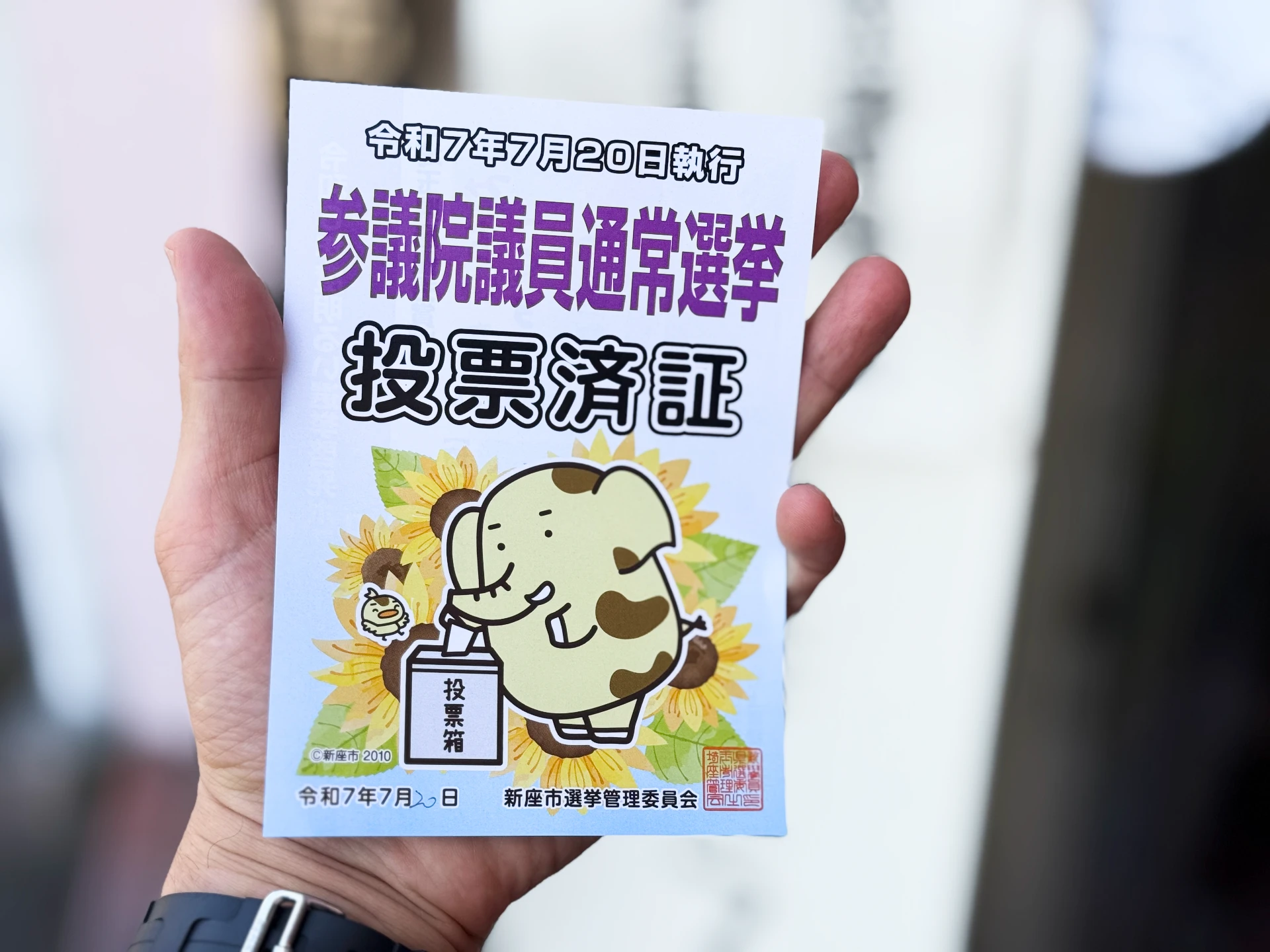
In Niiza City, Saitama, you receive a proof-of-voting slip featuring the mascot “Zoukirin.”
Those who once thought “my one vote won’t change anything” should now grasp its weight. Still, over 40% abstained. If even more voices are heard in the next Lower House election, the public will be reflected more accurately. Please, go vote.
★
Japan, too, may start to resemble the U.S. and parts of Europe, with more people embracing populist or sharp-edged views and those forces growing. Our politics, long slow to change, could become far more dynamic. In such times it is vital that each of us researches and votes with knowledge.
Hossy.orgis a site where Tetsushi Hoshikawa (Hossy) shares information from his various experiences such as entrepreneurship, management, and graduation through blog articles, podcasts, and other activities.
Tetsushi Hoshikawa
Founded Trinity Corporation, which deals with digital life products, and "graduated" after about 20 years of management.
Serves concurrently as the CEO of Eureka Studio Corporation, a company planning and developing casual games for smartphones, and as the CEO of the investment company Cosmo Studio.
I regularly publish blog articles and podcasts on topics such as management, hobbies, and current events. If you subscribe to our news updates, we will send you notifications about new content, so feel free to register.(We do not distribute advertisements or similar content)
 Language


 NHK ONE

 The Nikkei













Comments