We publish blog articles on management, hobbies, current events, and podcasts daily. If you register for news updates, we will send you update information, so feel free to sign up. (We do not distribute advertisements)
About
Hoshikawa Tetsushi (Hossy)'s personal siteHossy.orgis a site that outputs information from various experiences such as entrepreneurship, management, and graduation through blog articles, podcasts, and various activities.
Is the Era of GEO Replacing SEO? The Most Important Thing Remains
With the arrival of ChatGPT,adoption has accelerated at an exponential rate,and generative AI has quickly become widespread. In today’s online world, the landscape surrounding search engines is changing dramatically.
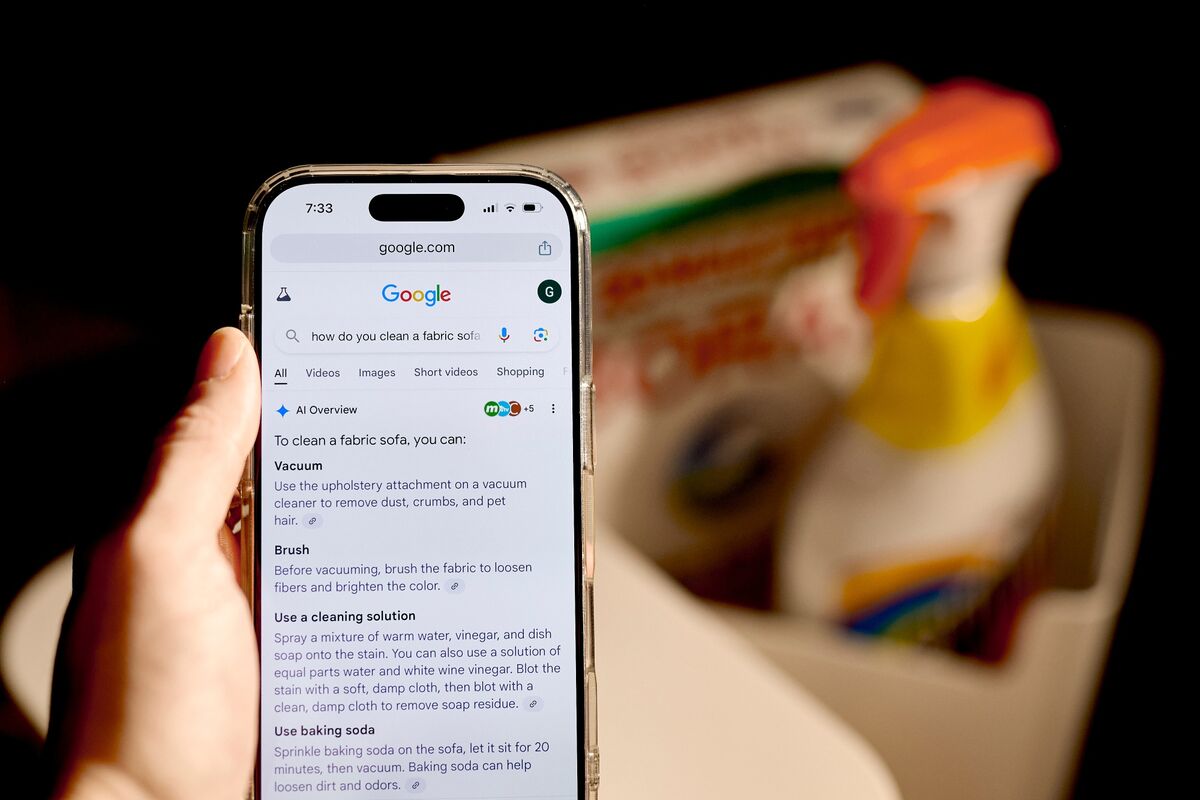
Until now, SEO (Search Engine Optimization) dominated web marketing, but a new concept—GEO (Generative Engine Optimization)—is beginning to emerge. Most generative AIs, not just ChatGPT, crawl websites for training and are evolving into **“answer engines,”** presenting users with summarized results. Because they now provide direct answers to users’ questions instead of a list of links, user behavior is shifting dramatically.
Spurred by that Forbes article, I’d like to jot down some thoughts on the transition from SEO to GEO, the background behind it, and the core principles that remain unchanged.
Like many others, I also use generative AI; at the moment I switch between OpenAI ChatGPT Pro and Google Gemini Advanced (bundled with Google Workspace). For this piece I’m using ChatGPT Pro’s Deep Research feature to help with my research—and that very act is part of today’s theme.
Topic
How are search engines changing?
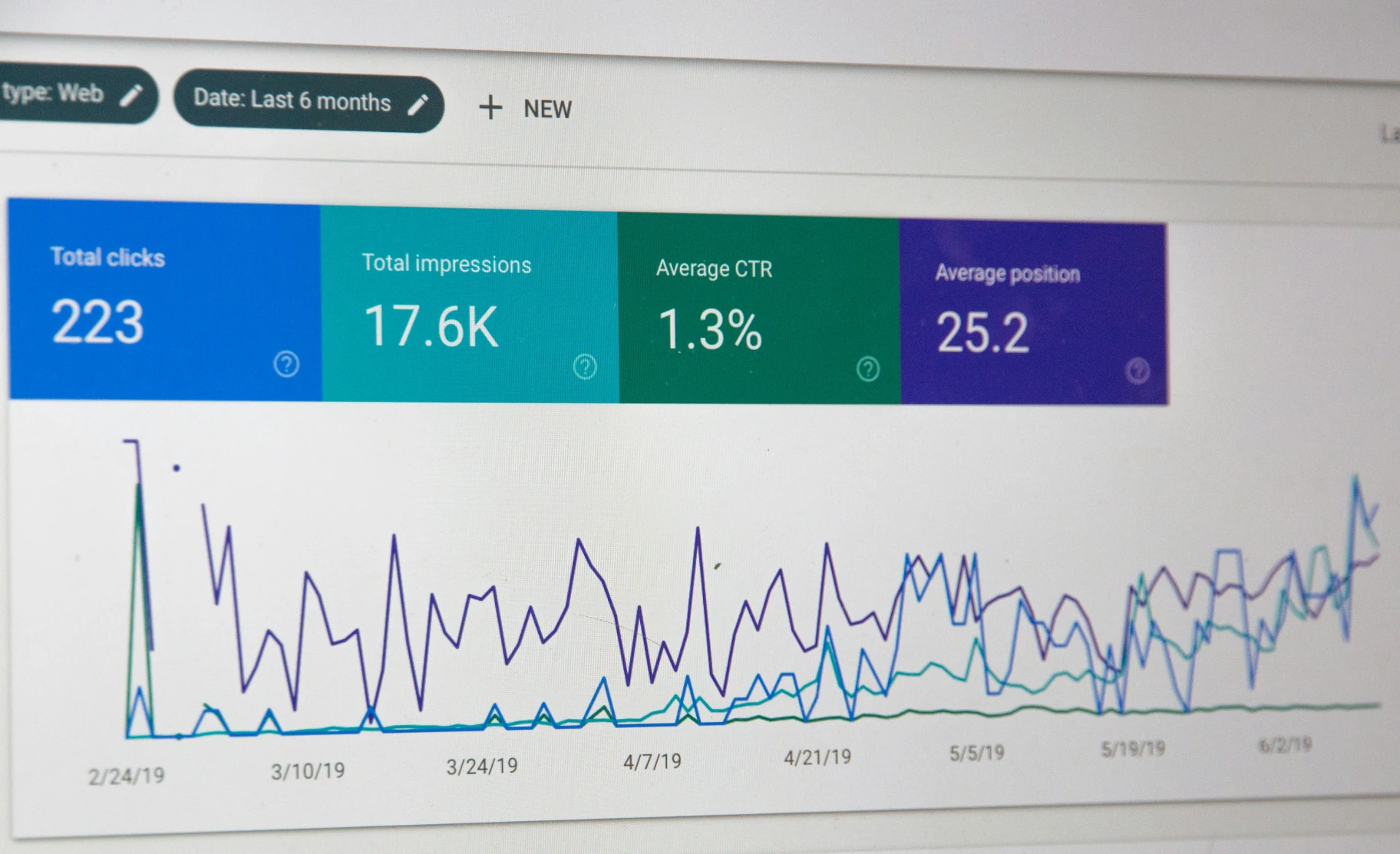
First, let’s look at the ongoing changes in the search-engine landscape. Bain & Company reports that 80 % of consumers use AI-generated summaries in at least 40 % of their searches, leading to a drop of up to 25 % in clicks to websites.
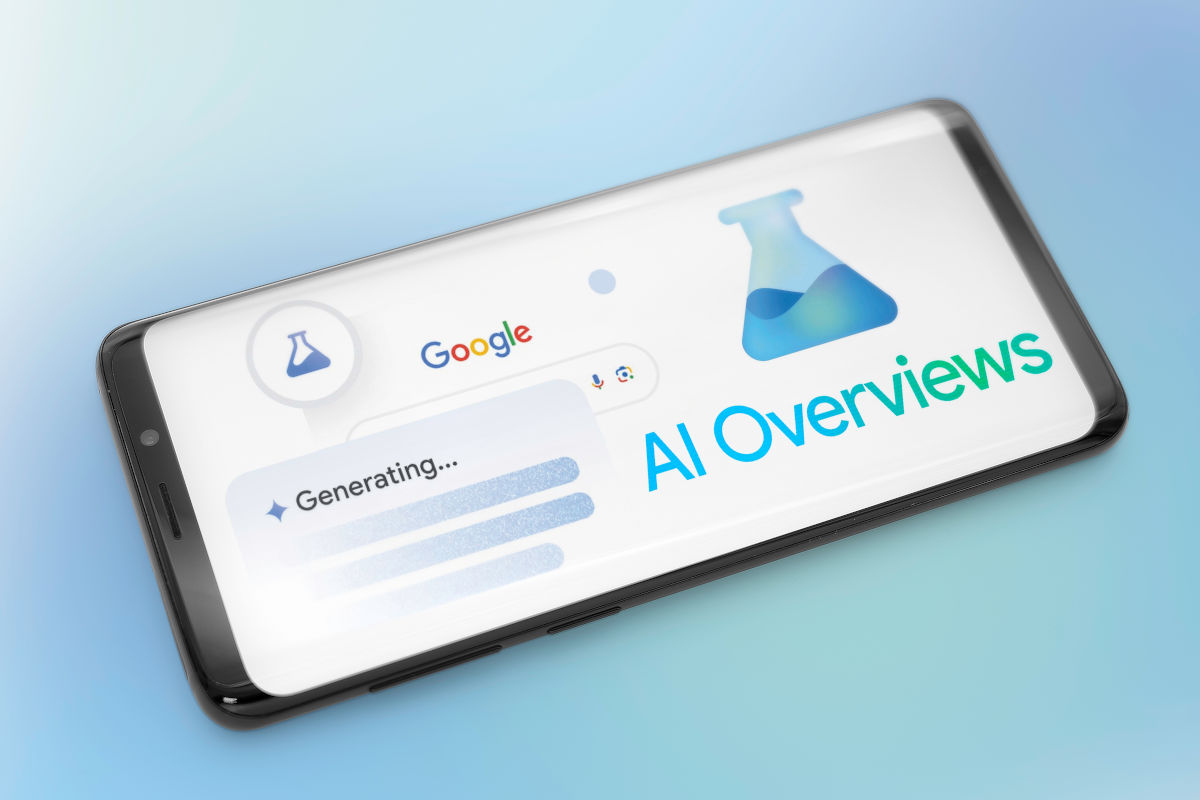
In other words, many users are satisfied with AI-generated summaries or answers instead of clicking links on the results page. **In particular,** Google says it offers its AI-powered search feature (“AI Overviews”) in more than 100 countries, and over one billion people use it every month.
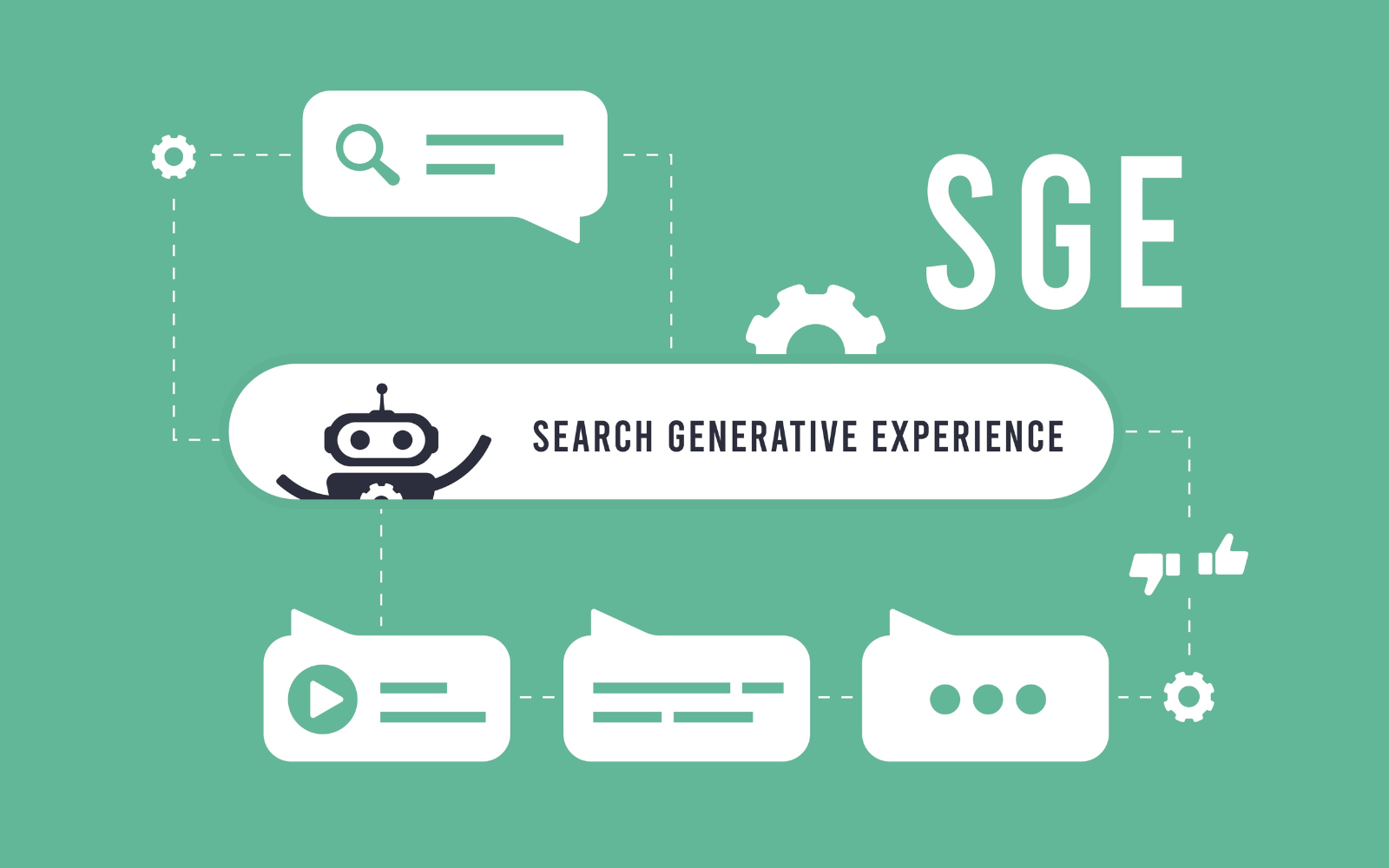
The shift from traditional list-style results to “answer engines” that respond directly to questions is underway, and new players such as OpenAI ChatGPT, Microsoft Copilot, and Perplexity AI are rising rapidly.
What’s worrying in this environment is that if you focus solely on conventional SEO, youropportunities for exposuremay shrink. In extreme terms, no matter how high you rank in search results, if your content is not included in the AI-generated answer, users may never see it. In fact, some companies have already experienced double-digit drops in search traffic because they lack an AI-ready strategy. In other words, search-driven traffic is nowstarting to be siphoned off by AI,and that is exactly what is happening today.
In the past, people could be satisfied just by reading roundup pages, but with the advent of generative AI, that is becoming the norm.
So, what exactly does this new buzzword “GEO” mean?
Simply put, GEO (Generative Engine Optimization) is an optimization method that helps “AI-based search/answer engines” discover your content and cite or use it in their answers. While traditional SEO focused on optimizing keywords and meta tags so that algorithms like Google’s would rate a page highly, GEO emphasizes providingcontent that answers users’ questions comprehensively and directly.That is where the real focus lies.
It is crucial to ensure generative-AI systems can cite our content as evidence for their answers, which means clearly indicating the topic and expertise of each page.
Concretely, in addition to the technical tricks of traditional SEO—such as stuffing invisible keywords for human readers—Structured dataand clear labeling are required so that AI can accurately understand the content.
Success metrics will also change; in traditional SEO, from the search results to one’s own siteclicks, for example,used to be the chief focus, but in GEO the extent to which AI toolsmention or link toyour pages is becoming the new yardstick. In other words, more than rankings, whetheryou are selected for inclusion in an AI responseis the crucial factor.
That said, there is no need to panic and rush counter-measures. Most mainstream websites and CMS platforms already provide plug-ins that help you add structured data and optimize meta information, so the basics can be covered without deep technical knowledge. In short, organizing your content’s themes so they are easy for both generative AI and people to graspis the key to effective GEO.you could say.
The looming impact on bloggers and affiliates
When generative AI starts completing answers right on the results page, users may stop clicking links andad impressionsandaffiliate conversionsface a very real risk of plummeting. If people don’t visit your site, they naturally won’t see the ads there. One U.S. DIY blog reported that after Google’s AI overview test, page views fell 70 % and ad revenue 65 % in just a month (Google hasissued a rebuttal).
That said, there are still moves you can make. Here are ChatGPT Pro’s suggestions.
Sharing first-hand experiences: Differentiate yourself with raw information that AI struggles to create—exhaustive hands-on reviews, on-site photos, tales of failure, and so on.
Deep data dives and unique validation: Add advanced techniques not found in the official manuals and re-calculated charts so that AIhas no choice but to citesuch irresistible value.
Multi-channel expansion: Instead of relying solely on a blog, build routes to video, social media, and email communities so you are not at the mercy of AI summaries,and build a loyal fan basein the process.
Being cited by AI is an awareness-boosting opportunity, but to keep monetization intact,“depth and uniqueness”plusturning readers into a communitybecome more important than ever.
Content strategy demanded in the GEO era
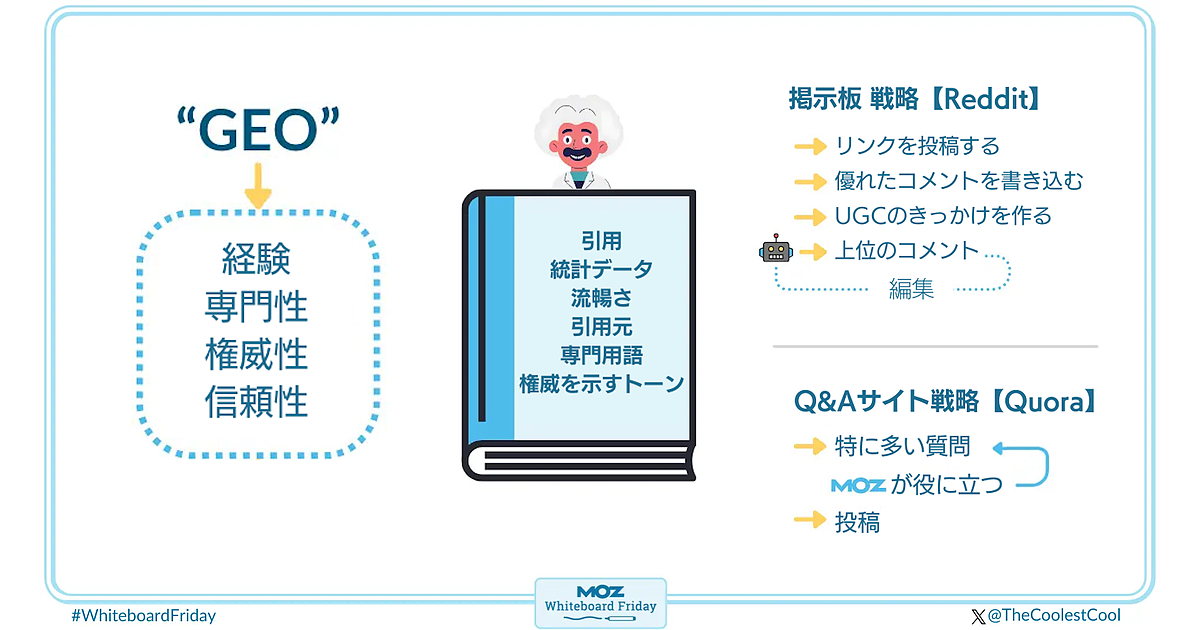
The advent of GEO doesn’t require flashy new tricks. Even if AI-generated answers dominate, the basic approach is still an extension of proven content marketing: accurately grasp user needs (search intent) andprovide valuable informationremains the top priority. Studies analyzing what shapes AI answer quality report thatcontent with high Experience, Expertise, Authority, and Trustworthiness (E-E-A-T)is exactly what AI is most likely to adopt. This matches Google’s long-heldhigh-quality contentprinciples.
Therefore, even in the GEO era, the quickest route is to return to basics andin your area of expertisekeep producing rich content consistently. It may feel roundabout, but it’s actually the fastest path. Imagine the questions users will have andoffer clear, concrete, and in-depth answersin more and more pages. Also bolster credibility with statistics and citations. This content benefits humans and also serves asa valuable knowledge sourcefor AI. As a result, your site is more likely to be cited in AI-generated answers (“Source: xxx”), creating new avenues for traffic and brand recognition.
Below are concrete measures proposed by ChatGPT Pro.
Answer questions instantly in a Q&A format—Phrase headings as questions and put the conclusion right after so AI can easily capture it.
Make exhaustive use of structured data—Clarify the topic with FAQ/How-To schemas and keep paragraphs short and tidy.
Make author information transparent—Include qualifications, achievements, and social-media links in the profile to make clear who wrote it.
Allow crawlers access—Do not block GPTBot or Google-Extended in your robots.txt file.
In the end, it all comes down to content quality
What I want to stress in closing is that, even as times change,what truly mattersThe point is that it “doesn’t really change.” The arrival of generative AI may make many things seem in flux and the new notion of GEO may feel threatening, yet the core strategy is, in truth, not very different from what we have been doing up to now.
As some have pointed out—“In the end, there’s nothing new about GEO; it’s all stuff we’ve been learning for ages”—ultimately it’s the steady accumulation of grounded fundamentalsthat makes the difference. Don’t forget that steadily providing high-quality, trustworthy, and regularly updated content—without being tossed around by algorithm specs or tricks—is the unfailing royal road in both the SEO era and the GEO era.
I still believe that in-depth stories about restaurants, bars, and other experiences AI cannot have are very much worth producing.
Additionally, richly detailed articles that AI cannot fully boil down—such as pieces that recalculate public data,conduct original analysis,lay bare on-the-ground successes and failures,present case studies,or exploreultra-niche segments of an industryin exhaustive reviews—will be valued even more going forward.
I often say that “the internet age is the age of nerds.” The era when shallow, broad knowledge for the masses had value is over; now worth is found in possessing narrow, deep knowledge of each subject.
AI is good at compiling generic information, but it cannot learn the first-hand datathat comes from sweat and experience,and therefore cannot generate it. That is why, as long as we keep honing deep, unique content that hits readers directly, **“narrow and deep information”** will always be in demand—even in the AI age.
Digital marketing is a fast-changing world, yet the underlying mission of “delivering value to users” is constant. No matter how search engines or generative AI evolve, if you create and refine content that exists nowhere else, the users who need it—whether they find it in search results or in an AI answer—will recognize its value, even if it’s not for the masses.
The experience of actually visiting a place is still content that AI cannot learn from.
In every era, what ultimately matters isquality content.I will keep that as an unwavering pillar and continue to write about the cases and thoughts that emerge from experiences only I can have.
★
I think many people will often be satisfied with the summary AI provides. But if you include every detail, it’s no longer a summary, so you inevitably have to “trim” things down. Yet the parts that get trimmed are sometimes the most important. That makes you want to read the original after seeing the summary. Images also don’t appear in summaries, so illustrations, photos, and graphs are invisible in an AI digest.
As a result, I believe people will end up coming to the website or blog after all. Of course, we can’t deny that some will be satisfied with just the summary; that’s exactly why they watch YouTube or TV programs at double speed. Those who consume content in this “speed-reading” way—caring little for pauses, atmosphere, or pacing as long as they grasp the story—may, in a sense, split off as a different readership.
For my part, I intend to keep this Hossy.org blog focused on content and ideas that AI doesn’t yet know.
P.S. That said, AI will keep learning all of this too, so it may eventually catch up. We’ll always have to chase what’s new.
Hossy.orgis a site where Tetsushi Hoshikawa (Hossy) shares information from his various experiences such as entrepreneurship, management, and graduation through blog articles, podcasts, and other activities.
Tetsushi Hoshikawa
Founded Trinity Corporation, which deals with digital life products, and "graduated" after about 20 years of management.
Serves concurrently as the CEO of Eureka Studio Corporation, a company planning and developing casual games for smartphones, and as the CEO of the investment company Cosmo Studio.
I regularly publish blog articles and podcasts on topics such as management, hobbies, and current events. If you subscribe to our news updates, we will send you notifications about new content, so feel free to register.(We do not distribute advertisements or similar content)
 Language




 Google
 Search Engine Journal
 Bloomberg.com















Comments