We publish blog articles on management, hobbies, current events, and podcasts daily. If you register for news updates, we will send you update information, so feel free to sign up. (We do not distribute advertisements)
About
Hoshikawa Tetsushi (Hossy)'s personal siteHossy.orgis a site that outputs information from various experiences such as entrepreneurship, management, and graduation through blog articles, podcasts, and various activities.
We’ve received notice that Skype will discontinue its service as of May 5, 2025. For readers unfamiliar with Skype, an AI has provided the following summary.
Free Online Meetings & Video Cal…
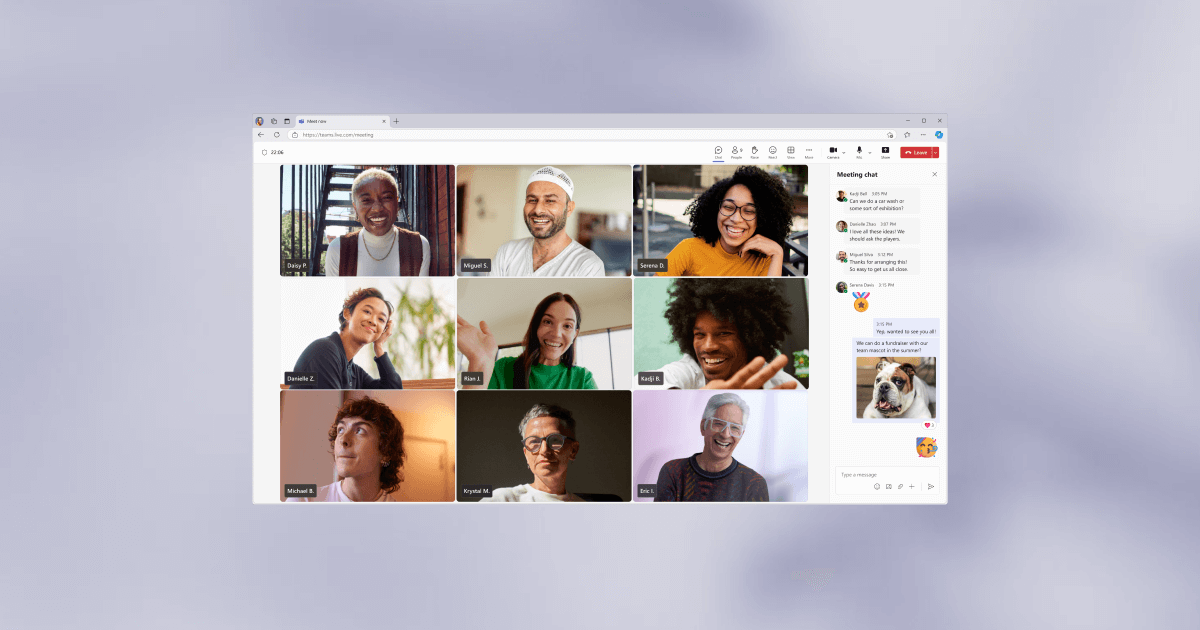
Free Online Meetings & Video Calls | Microsoft TeamsStart free Teams video calls instantly! Connect, collaborate, and communicate effortlessly. Enjoy features like video calls, chat, file sharing, and more. Perfe…
Skype was born in Estonia in 2003, bought by eBay in 2005, and by Microsoft in 2011. It merged with Windows Live Messenger in 2012 and got a new UI in 2020. Using P2P technology, it made international calling free and grew explosively around 2006. The current version offers encrypted calls, video meetings, screen sharing, recording, and paid calls to landlines and mobiles; it also links with Teams and supports many languages, so it’s used widely by individuals and companies alike. The pandemic gave it a second wind, proving useful for working from home.
To be honest, I no longer use Skype—I even deleted the app—so its shutdown won’t bother me. Back in 2006, though, when we founded Trinity, it was our main phone service. Even then Skype already had “SkypeIn” and “SkypeOut,” which connected internet calls to real phone numbers, letting us place and receive calls just like on a regular line.
Frankly, the audio quality wasn’t great. But because the three of us started Trinity with no office, Skype was a huge help, not only for calls among ourselves but also as a general phone line for clients. With an internet connection and the Mac app, an incoming call rang on everyone’s Skype, and whoever picked up could talk. A USB handset let us speak as though on a normal phone. We could also dial out to ordinary numbers, so even though each of us was working remotely (it wasn’t called that yet), our phone system worked fine.
In a blog post from that time I listed the advantages like this:
• Fixed costs are dramatically lower than those of a standard business landline.
With the SkypeIn service you get a phone number beginning with 050, and keeping it costs just 4,000 yen per year. Let me repeat: per year.
• As long as you have a computer, you’re not tied to any location.
For example, if you take your MacBook Pro somewhere and have an internet connection, you can use the phone exactly as you would in the office. Staff no longer have to commute every day, and even when traveling they can send and receive calls normally, so you won’t lose business because no one could pick up the phone when the team is small.
• You can make full use of the address book.
If you build a phone book from the contacts stored on your computer, you can dial with a click, and incoming callers’ names appear on-screen.
Thanks to this setup, our fourth employee—based in Osaka and in charge of customer support—could use the same number for both incoming and outgoing calls, handle the phone remotely, and join the company with far fewer hurdles.
Later, when headcount grew and we opened an office, we basically phased Skype out and switched to a standard IP-phone system. We kept using Skype for chat for a while, but because it couldn’t manage threads the conversations got messy; once we moved to Google Chat I stopped launching Skype altogether.
Still, it’s poignant to see a service that helped us for so many years come to an end.
Farewell, Skype. Thank you for everything. Thanks to you, Trinity was able to do business remotely. We’re grateful.
★
Skype started with voice calls and once took the world by storm, but newcomers eventually caught up, and after Microsoft bought it the service seemed to fade. It feels like the classic rise-and-fall story.
We’re in the heyday of cloud services, yet it’s hard to judge whether any given service will stay around. If you roll one out company-wide—investing time and effort in manuals and training—and it shuts down, you end up back at square one.
Fortunately, Skype is shutting down at a time when I’m no longer using it, and while I have no desire to go back, its successor Microsoft Teams should make migration easy enough. Microsoft once bought Wunderlist, a task-management app I loved, and later shut it down (folding its features into Microsoft’s own suite), so I suspected Skype would meet the same fate—and sure enough, it has.
This episode reminded me once again that we have to be very selective about which services we rely on.
Hossy.orgis a site where Tetsushi Hoshikawa (Hossy) shares information from his various experiences such as entrepreneurship, management, and graduation through blog articles, podcasts, and other activities.
Tetsushi Hoshikawa
Founded Trinity Corporation, which deals with digital life products, and "graduated" after about 20 years of management.
Serves concurrently as the CEO of Eureka Studio Corporation, a company planning and developing casual games for smartphones, and as the CEO of the investment company Cosmo Studio.
I regularly publish blog articles and podcasts on topics such as management, hobbies, and current events. If you subscribe to our news updates, we will send you notifications about new content, so feel free to register.(We do not distribute advertisements or similar content)
 Language









Comments